Rewiring a home: preparation, coordination and handover
Published on 31 July 2026 · Verified on 18 September 2026 · The Mestravaux.lu team
Electrical renovation starts with existing condition and future use, not floor area alone. Before scheduling finishes, define retained circuits, required work and return-to-service conditions. These stages organise a project; they are not instructions for DIY electrical work.
The essentials in 30 seconds
- Have the installation professionally assessed.
- Confirm layout and appliances before closing walls.
- Check procedures early with the relevant network operator.
- Include shutdowns, tests and handover documents in the contract.
Assess the existing installation
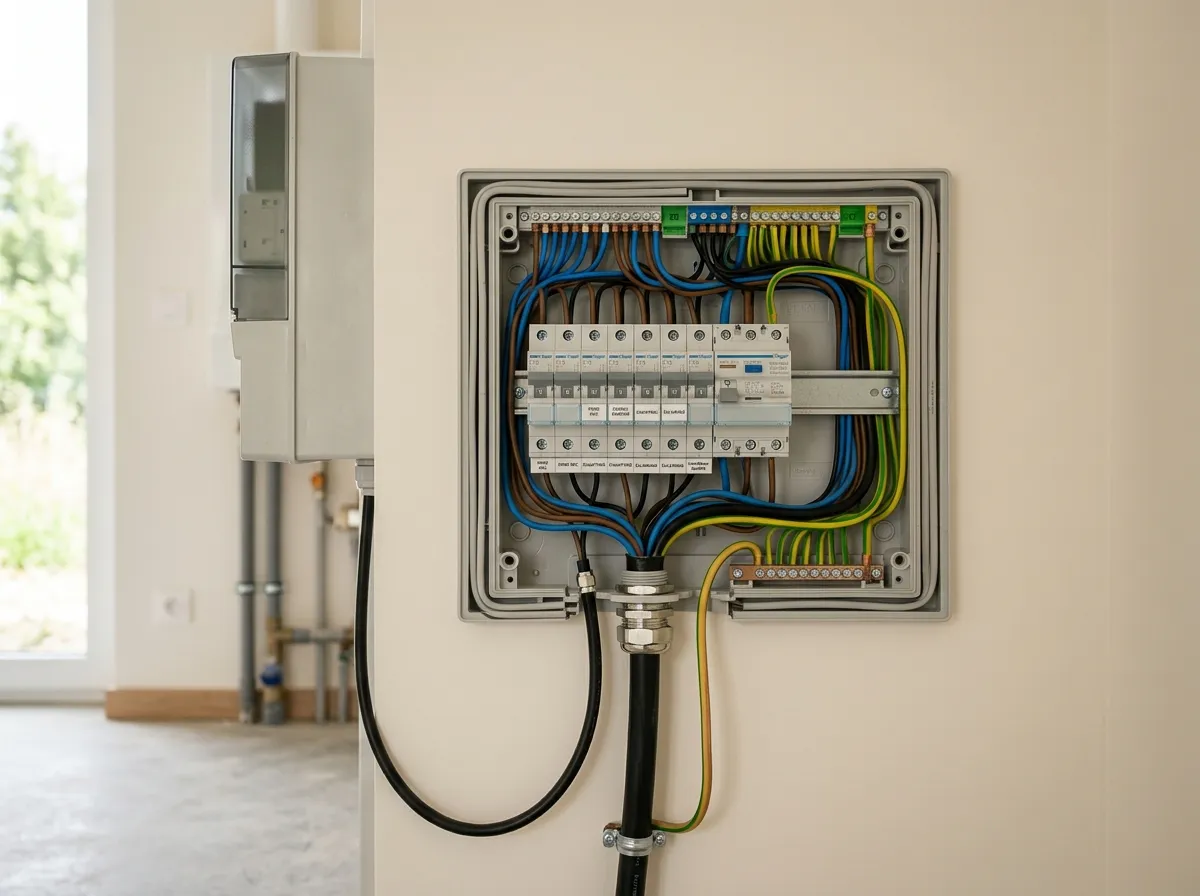
Creos recommends professional checks. Gather plans, reports, incidents and known changes. Request records of checked circuits, access limits and outstanding investigation. A working socket alone does not prove installation safety.
| Étape | Durée | Coût indicatif |
|---|---|---|
| 1. Diagnostic de l'existant | 1 à 2 heures | 150 – 300 € |
| 2. Devis et choix de l'électricien | 2 à 4 semaines | Gratuit à quelques dizaines d'euros |
| 3. Câblage et saignées | 1 à 2 semaines | 50 à 60 % du budget total |
| 4. Pose et raccordement du tableau | 1 journée | 800 – 2 500 € |
| 5. Finitions (rebouchage, coordination) | Variable selon le chantier | À la charge du plâtrier, hors électricien |
| 6. Contrôle final et mise en service | 1/2 journée | 150 – 300 € si contrôle formel demandé |
Durées indicatives pour un logement vide ; un logement occupé rallonge les étapes 3 à 5.
Define uses and alternatives
Place fixed appliances, sockets, controls and lighting on the plan. State continuity needs, occupants and future projects. Ask why circuits can remain or need replacement. Separate defect correction, extension and full renovation before comparing offers.
Plan network procedures
Connection or capacity changes may require a process with the relevant operator. Creos describes its procedure and recommends a complete application before work. Confirm the address’s operator, documents and project stages rather than applying Creos procedures everywhere.
Specify the contract
List circuits, board, equipment, routes and finishes. Allocate opening and closing walls, protection and waste removal. Agree deposit, payments and hidden discoveries through the accepted offer; assume no standard percentage or availability period.
Your project deserves an accurate estimate — it's free.
Request a quotePlan occupancy and outages
Define work zones, shutdowns and any professionally designed temporary supplies. Assess remaining at home against heating, food storage, access and individual needs. Do not improvise distribution with extension leads.
Handover with evidence
Request checks appropriate to the work, their results and resolution of outstanding issues. A test button alone does not summarise whole-installation verification. Include updated diagrams, circuit labels, manuals and applicable conformity documents. Clarify installer, operator and any inspection-body roles.
Frequently asked questions
Must every old installation be replaced?
Not from age alone. Establish condition, needs and justified scope.
Can occupants stay?
Assess with the contractor against phases, available services and safety.
How long should the project take?
Request a schedule including deliveries, other trades, access and any network procedures, not just fitting days.
Does a meter check validate the whole home?
Separate connection work from internal-installation checks; ask for each check’s scope.
What if an unexpected circuit appears?
Document it and agree additional scope before extra work, including necessary safety measures.
Take action
Your project deserves an accurate estimate — it's free.
Request a quote